An attic is out of sight, so a problem up there can run for months. After weeks of fall rain, a small roof leak or poor ventilation can leave insulation damp and framing wet, and mold damage can follow before anything shows on the ceiling below. This post explains how rain reaches an attic, what signs to check from inside the living space, and when to call a professional.
How Fall Rain Reaches an Attic
Water finds small openings: worn flashing around vents and chimneys, lifted shingles, or gaps near skylights. Wind-driven rain can push water under roofing in a way ordinary showers do not. Moist indoor air can also rise into the attic and condense on cold roof framing. Either way, damp insulation and wet wood create conditions that support mold damage. For anyone who already sees staining or smells something musty, the contact page is the quickest way to ask a question.
Signs of Mold Damage From Below
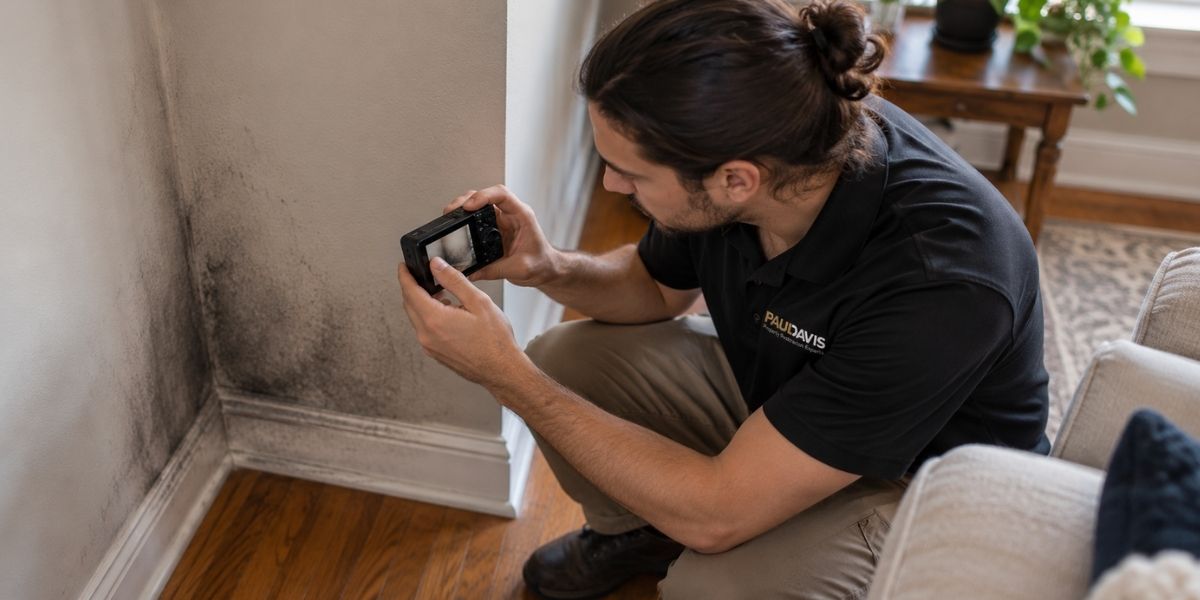
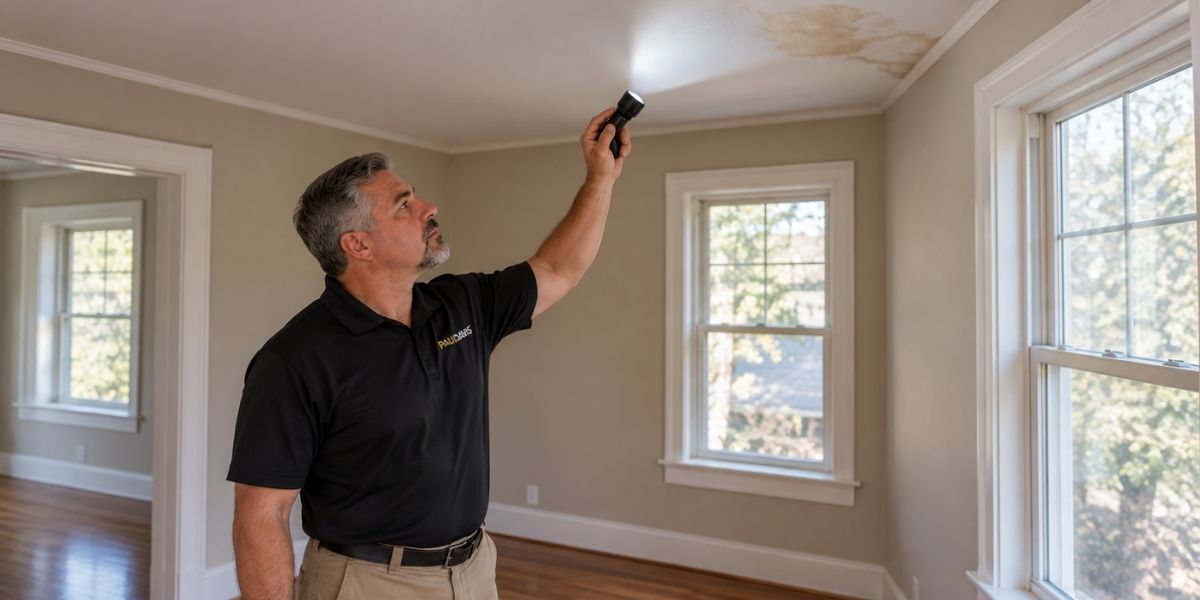
You can learn a lot without entering the attic. Look for brown or yellow ceiling stains, especially after rain, along with bubbling paint and sagging drywall. A musty smell near the attic hatch or in upstairs rooms is another clue. Dark spots at the top of exterior walls can also point to moisture above. Paul Davis of Portland/Vancouver covers Amboy and many other communities across the region.
Looking Into the Attic Safely
Open the hatch and use a flashlight from the ladder, instead of stepping into the attic. Insulation hides the joists, and stepping between them can break through the ceiling. Look for damp or compressed insulation, dark staining on the underside of the roof deck, rusted nails, and daylight where there should be none. Wear a mask and gloves, and avoid touching suspected growth.
Ventilation and Bathroom Fans
An attic needs airflow to carry moisture out. Check that soffit vents are not blocked by insulation and that ridge or gable vents are clear. Bathroom fans should vent outdoors, not into the attic, because humid air from a shower can soak the roof deck all winter. A homeowner in Ariel can check this in a few minutes and prevent a slow buildup that leads to mold damage.
Insulation and Roof Sheathing
Wet insulation loses its effectiveness and holds moisture against the wood. If it is flattened, stained, or smells musty, it may need to be replaced. Roof sheathing that stays damp can darken and, over time, deteriorate. Fix the leak or ventilation problem before replacing materials, or the new insulation will get wet too. A small leak caught in the fall is far easier to repair than one found after months of winter rain.
Common Attic Mistakes
Do not seal a damp attic tightly without fixing the source, and do not pile stored items against the roof deck. Avoid painting over ceiling stains, since the stain returns if the source is still active. Cleaning visible growth without finding the moisture only provides temporary relief. Each shortcut feels like progress but leaves the cause in place.
What to Do If You Suspect Mold Damage
Find the water source first, then dry the area. Growth can start within a day or two when materials stay wet. Small patches of surface growth on hard surfaces, generally under about 10 square feet, can often be cleaned with detergent and water while wearing gloves and a mask. Growth on insulation or sheathing, or any area larger than that, should be assessed by a professional. If mold damage follows a roof leak, ask your insurance company what documentation it wants.
When to Get the Attic Inspected
Call when growth covers framing or sheathing, when insulation is wet, or when you cannot find the source. A professional can locate the moisture, contain the attic so spores do not spread into the house, and remove damaged materials. Anyone in Beavercreek who finds stained insulation or a musty attic can ask the team to inspect it.
How Paul Davis of Portland/Vancouver Can Help
Paul Davis of Portland/Vancouver offers 24/7 emergency service, and its technicians are IICRC certified. It lists a free estimate and a free consultation. See the residential mold damage page if you are concerned about what is above your ceiling.
Frequently Asked Questions
How do I know if there is mold damage in my attic?
Ceiling stains, a musty smell, damp insulation, and dark staining on the roof deck are common signs.
Is it safe to walk in an attic?
Not on insulation. Look from the hatch with a flashlight, since stepping between joists can break through the ceiling.
Can bathroom fans cause attic mold damage?
If they vent into the attic, yes. Fans should vent outdoors.
Should I replace wet insulation?
Often yes, once the leak or ventilation problem has been fixed. A professional can advise.
Are estimates free?
Yes. Paul Davis of Portland/Vancouver lists a free estimate and a free consultation.
If the ceiling shows stains after weeks of rain, Paul Davis of Portland/Vancouver can inspect the attic for mold damage.
Follow Paul Davis of Portland/Vancouver: Facebook | Instagram | YouTube