 Fire damage restoration can feel like too much to tackle when you’re still in shock from a home fire. In the first hours and days, the decisions you make affect what can be saved, how long you’re displaced, and how smoothly the insurance process goes. According to Chuck Singleton, Senior Project Manager with Paul Davis, the actions taken early can make a significant difference in both recovery time and overall outcome.
Below is clear, practical guidance on what to do—and what to avoid—so you protect your health, your property, and your claim while the right professionals bring your home back to livable condition.
Step 1: Confirm safety, then secure the property
Before you do anything else, make sure everyone is safe and that you have permission to re-enter the home. Even after the flames are out, hazards can remain, including weakened floors, compromised framing, sharp debris, and harmful soot particles in the air.
Once you’re cleared to access the property, focus on basic protection:
-
Arrange for the home to be secured if doors or windows are damaged
-
Use temporary coverage if the roof is compromised to limit water intrusion
-
Avoid turning utilities back on until a qualified professional confirms it’s safe
These steps don’t fix the damage, but they help prevent secondary losses that can complicate recovery.
Step 2: Fire damage restoration starts with calling your insurance adjuster early
One of the most important next steps is contacting your insurance adjuster and a professional restoration company as soon as possible. fire damage restoration is time-sensitive: smoke residues become harder to remove, soot can permanently stain surfaces, and water from firefighting efforts can lead to corrosion and mold growth.
In many cases, the insurance adjuster and restoration professionals will meet on site to evaluate the damage together. This coordinated approach helps ensure the scope is documented correctly and decisions are made efficiently.
A major mistake homeowners make is attempting cleanup on their own. Tearing into walls or removing materials too soon can cause additional damage and complicate the insurance process. The safest approach is to notify your insurance provider and allow trained professionals to guide the recovery.
Step 3: Document damage carefully before disturbing materials
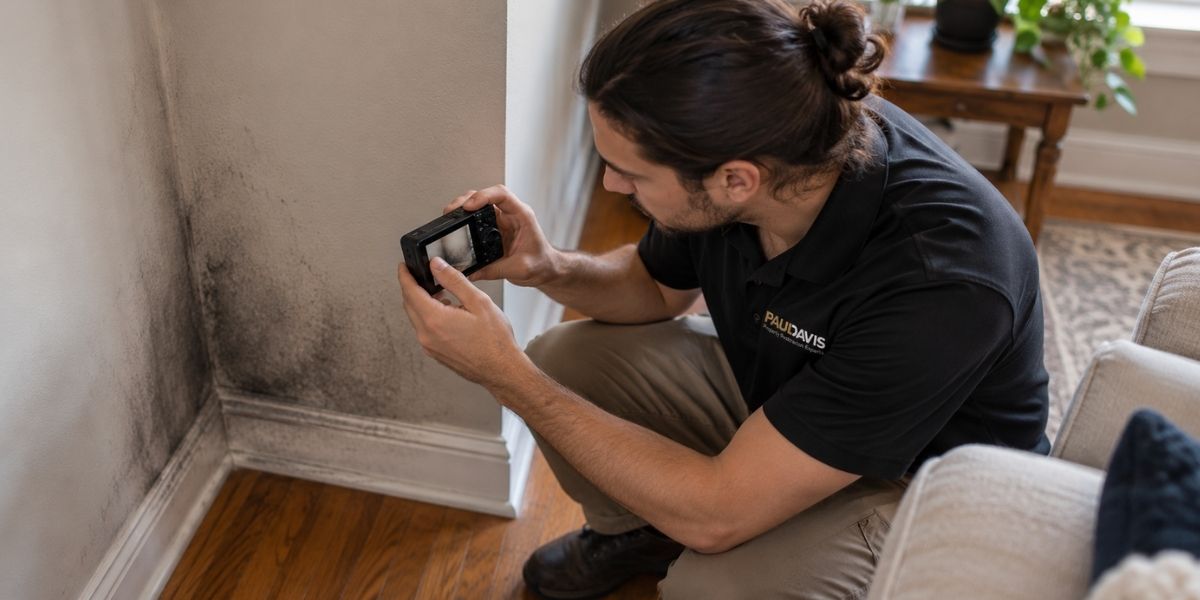
Before anything is moved or removed, take time to document what happened. Thorough documentation helps align expectations and protects you throughout the claim process.
Helpful documentation habits include:
-
Taking wide photos of each room and close-ups of soot, heat, and water damage
-
Recording model and serial numbers for appliances and electronics
-
Starting a simple inventory list of visibly affected contents
If you’re unsure whether something should be moved, ask first. Moving the wrong item too early can spread soot into unaffected areas.
Step 4: Prevent soot and smoke from spreading
Soot particles are extremely fine and can travel easily through a home. Limiting cross-contamination helps protect areas that may still be salvageable and supports fire damage restoration from the outset.
Do
-
Keep doors closed between damaged and undamaged areas when safe
-
Leave HVAC systems off until evaluated
-
Limit foot traffic in heavily sooted spaces
Don’t
-
Vacuum soot with a household vacuum
-
Wipe walls or ceilings to “test” them
-
Use strong household cleaners without guidance
Step 5: Decide what to replace vs. restore during fire damage restoration
Not everything affected by a fire automatically needs to be replaced. Decisions about what can be cleaned, restored, or removed are typically made collaboratively between the homeowner and the insurance adjuster, with support from restoration contents specialists.
A structured contents process often includes sorting items into salvageable, cleanable, or non-salvageable categories, tracking them carefully, and managing packing, storage, or disposal. For many families, this phase of fire damage restoration significantly reduces stress and uncertainty.
Structural materials may still be saved
Structural components are evaluated separately. In some cases, an engineer may determine that certain materials must be removed and rebuilt. In others, advanced techniques allow materials to be preserved safely.
For example, brick fireplaces heavily coated in soot may be restored using specialized methods such as ice blasting rather than being torn out. Modern restoration technology often saves more of the original home than homeowners expect.
Step 6: Address smoke damage properly as part of fire damage restoration
Smoke damage goes far beyond what’s visible. Odors can penetrate porous materials, travel into wall cavities, and linger if not handled correctly.
Professional treatment typically includes detailed cleaning, removing materials that cannot be restored, and sealing treated surfaces so odors don’t return. At Paul Davis, a synthetic shellac is commonly used to smoke seal affected areas. In fire damage restoration, this step locks in odor-causing particles and creates a clean surface so rebuilding can begin.
Step 7: Set expectations for the restoration timeline
While every fire is different, most projects follow a similar sequence: assessment, stabilization, contents handling, cleaning and sealing, then reconstruction.
When fire damage restoration is managed with clear communication and professional oversight, surprises are minimized and the household can return to normal more quickly.
Moving forward with the right support
Recovering from a home fire is not something homeowners should have to navigate alone. With the right professionals involved early, many materials can be saved, long-term issues can be avoided, and the process can move forward efficiently and correctly.
Working with experienced restoration experts ensures that damage is properly assessed, cleaned, sealed, and restored so homeowners can return to a safe and comfortable home. fire damage restoration is most successful when it begins early, follows a clear plan, and prioritizes health and safety at every step. Contact your local Paul Davis team now!